
Interview Preparation
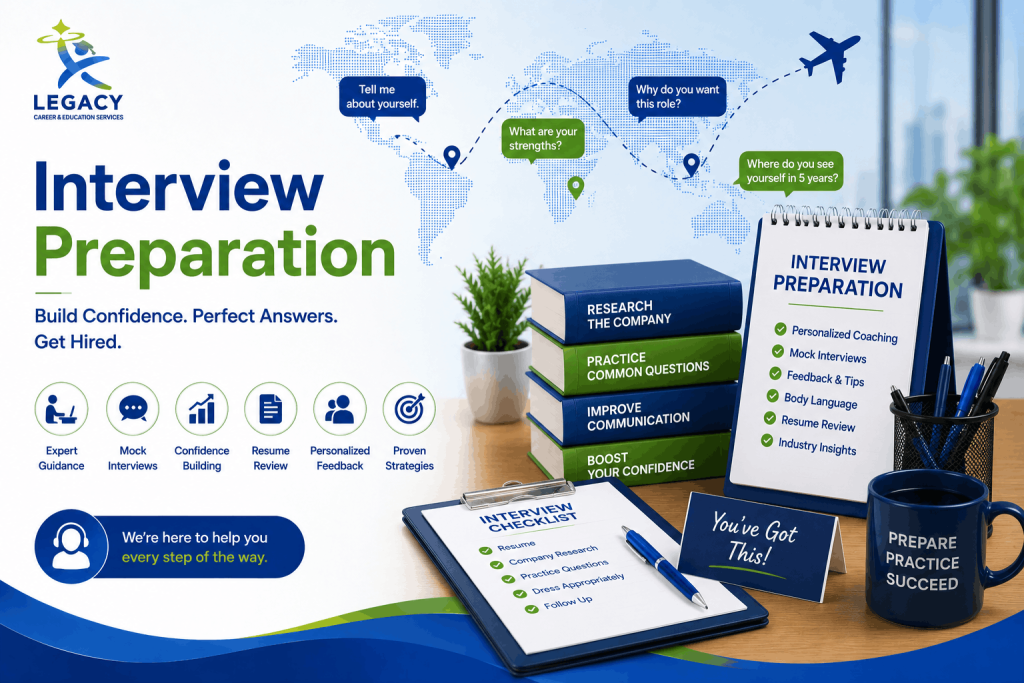
Walk In Prepared.
Walk Out Hired.
A great resume gets you the interview — but your performance in the room wins the job. Legacy’s Interview Preparation program trains you to answer confidently, present professionally, and leave a lasting impression on any panel.
From HR rounds to technical interviews and group discussions, our structured coaching covers every stage of the modern hiring process — giving you the edge over hundreds of other candidates.
Interview Process — Stage by Stage
Our Interview Prep Courses
Whether you’re a fresher entering the job market or a professional eyeing a promotion — choose the program built for your stage.
Fresher Interview Bootcamp
For fresh graduates entering the job market. Build your answer framework, fix body language, and conquer common HR questions from scratch.
Complete Interview Mastery
Our flagship program. Covers every round — HR, technical, GD, and final panel — with mock interviews, video review, and personalised feedback.
Senior & Managerial Prep
For mid-level professionals targeting senior roles. Focus on leadership scenarios, competency-based interviews, and executive presence.
Online Mock Interviews
Live one-on-one mock sessions over video call with real-time feedback and detailed written report.
Resume & Cover Letter
Professional resume writing and ATS optimisation to get past the first screening round.
Group Discussion Training
Practise GD rounds with peers — learn to lead, listen, and make your voice heard in group settings.
Last-Minute Crash Prep
Interview in 24–48 hours? Intensive 1-on-1 session to sharpen answers, presentation, and confidence fast.
Why Prepare for Interviews
at Legacy?
Years of Experience
Over a decade training candidates across Nepal for jobs in banking, IT, NGOs, teaching, corporate sectors, and government services.
Student Success Rate
92% of students who complete our program secure interviews or job offers within 60 days — backed by real tracking and follow-ups.
Mock Interview Rounds
Every student completes at least five full mock interviews — reviewed on video so you can see exactly what the panel sees.
Personalised Coaching
We don’t just teach generic tips. Your answers, your industry, your weaknesses — coaching that targets what you specifically need to fix.
Industry-Specific Prep
Whether you’re targeting banking, IT, NGO, hospitality, or government roles — our trainers tailor content to your specific sector.
Video Feedback Sessions
See yourself as the interviewer does. Video review sessions identify posture, eye contact, filler words, and tone issues you’d never catch otherwise.
Resume & LinkedIn Review
Your profile is your first impression. We review and optimise your resume and LinkedIn to ensure you get shortlisted before the interview begins.
Completion Certificate
Receive a Legacy Interview Preparation certificate upon course completion — demonstrating your professional readiness to employers.
Interview Tips from
Legacy Experts
Master “Tell Me About Yourself”
This is not an invitation for your life story. Structure it as: present role → past experience → why this role excites you. Keep it under 90 seconds and rehearse it until it feels natural.
Research the Company Thoroughly
Know their mission, recent news, products, and values. Weave this into your answers — panels notice immediately when a candidate has done their homework versus one who hasn’t.
Prepare for Salary Questions
Know your market rate. Answer confidently with a range based on research, not hesitation. Practise saying the number out loud — most people stumble because they’ve never actually said it before.
Have Smart Questions Ready
“Do you have any questions for us?” is not the end — it’s your chance to shine. Prepare two or three thoughtful questions about the role, team culture, or growth opportunities.
Control Your Entry — It Starts Before You Sit
Walk in at a measured pace, make eye contact, smile, and greet firmly. Panelists form impressions in the first 30 seconds — often before you’ve said a word.
Maintain Steady — Not Staring — Eye Contact
In a panel, distribute eye contact across all members. Look at the person asking the question, then naturally glance at others. Locking eyes only with one person makes others feel excluded.
Sit with Purpose
Sit upright, lean slightly forward. This signals engagement. Avoid crossing your arms (defensive) or slouching (disinterested). Place your hands on the table or gently folded in your lap.
Manage Nervous Habits
Hair touching, pen clicking, foot tapping — panels notice. Identify your nervous habits in mock sessions and consciously replace them with stillness and deliberate pauses.
Use the STAR Method for Every Story
Situation → Task → Action → Result. Every behavioural question (“Tell me about a time when…”) should follow this structure. It keeps your answer focused and makes your impact measurable.
Pause Before You Answer
A 2–3 second pause after a question looks thoughtful — not blank. It gives you time to choose the right example and prevents rambling. Practise pausing deliberately in mock sessions.
Answer Weaknesses Honestly — Then Pivot
“My weakness is I’m a perfectionist” fools no one. Name a real, minor weakness, then immediately explain what you’re actively doing to improve it. Authenticity impresses; clichés annoy.
Never Speak Negatively About Past Employers
Even if your last job was a nightmare. Panels assess your professionalism and emotional maturity. Redirect: “I learned a great deal, and now I’m ready for a new challenge with more responsibility.”
Treat It as a Conversation, Not an Interrogation
The panel wants you to succeed — they’re hoping you’re the right person. Shift your mindset from “they’re judging me” to “we’re figuring out if we’re a great fit for each other.”
Rejection Is Data, Not Defeat
Every interview you don’t get is a blueprint for the next one. Note what questions caught you off guard, what answers felt weak, and work on exactly those in your next practice round.
Prepare Until You Stop Dreading It
Confidence isn’t a feeling — it’s the result of repetition. The more mock interviews you do, the more familiar and manageable the real thing feels. Practice removes the unknown, and the unknown is what creates anxiety.
Sleep, Eat, and Arrive Early
Performance is physical. A tired, hungry candidate operating on adrenaline alone rarely performs their best. Treat the night before like a pre-match routine — rest is preparation too.
Other Preparation Classes
Mock Test
Legacy Mock Tests — IELTS & PTE IELTS & PTE Mock Test Series Test Yourself.Know ExactlyWhere You Stand. Practice without pressure. Legacy’s…
PTE Class
Legacy PTE PTE Preparation Ace PTE with a79+ Scoreat Legacy PTE Academic (Pearson Test of English) is a globally recognised, computer-based English…
English Class
Legacy English Classes English Language Classes Speak, Write & Thinkin Englishwith Confidence Strong English isn’t just a skill — it’s your passport…